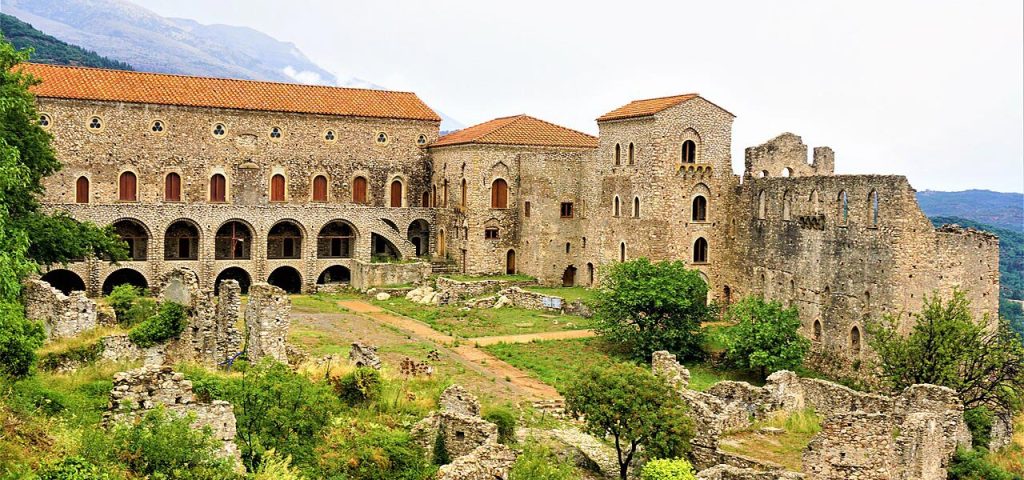
A Byzantine city carved into the slopes of Taygetos
The Mystras is one of Greece’s most powerful historical sites and a designated UNESCO World Heritage Site. Built into the slopes of Mount Taygetos near Sparta, Mystras was a major center of late Byzantine power, culture, and learning.
The castle city unfolds across the mountainside, with fortifications, palaces, monasteries, and churches forming a dramatic and deeply atmospheric landscape.
Historical and cultural importance
Founded in the 13th century, Mystras rose to prominence as the capital of the Despotate of the Morea. In its final centuries, it became one of the most important intellectual centers of the Byzantine world, playing a key role in preserving and transmitting classical and Byzantine knowledge.
Its churches house remarkable frescoes, widely regarded as masterpieces of late Byzantine art.
Exploring the site
Visiting Mystras is an immersive experience rather than a quick stop. The site is extensive and partly steep, inviting visitors to move slowly and engage with the environment. From the Palace of the Despots to the monastic complexes and fortified walls, each structure contributes to the sense of a living medieval city frozen in time.
Panoramic views over the Spartan plain reward those who explore the site in depth, adding a strong visual dimension to the historical journey.
Why it belongs on your itinerary
Mystras is not just a monument; it is a complete historical narrative set within a striking natural landscape. Few places in Greece offer such a powerful combination of architecture, history, and atmosphere.
For travelers staying in Kalamata or exploring the southern Peloponnese, Mystras is an essential cultural excursion that provides context, depth, and a profound connection to Greece’s Byzantine heritage.