

Some places exist in a kind of permanent layover between past and present. Kalamata's Municipal Railway Park is one of them. Steam locomotives and vintage carriages sit motionless on rails, surrounded by trees and the sound of children playing — 54 acres of open, free public space right in the heart of the city.
Municipal Railway Park of Kalamata
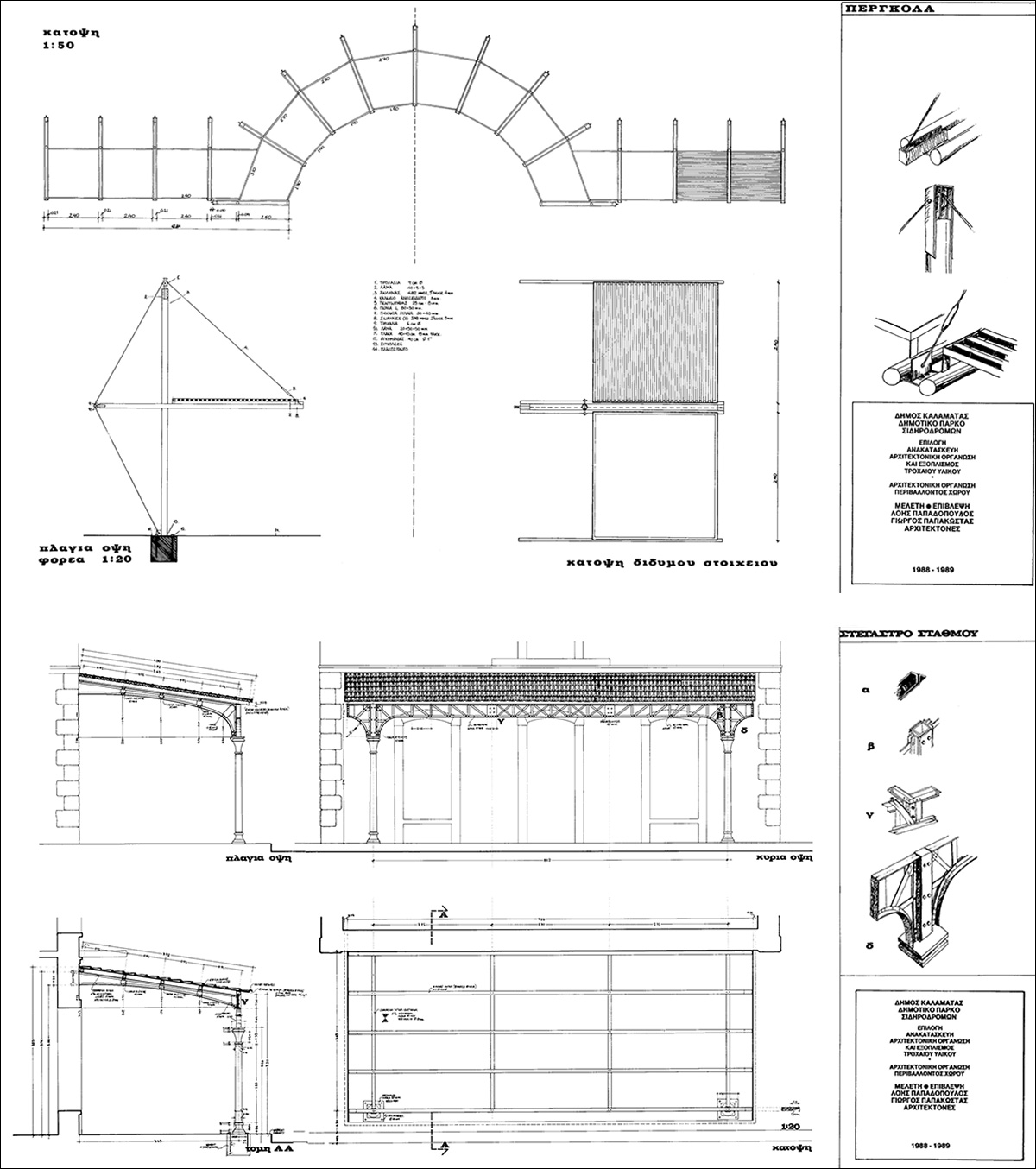
[Architectural Design, Source: Lois Papadopoulos, www.loispapadopoulos.net ]
The land that today hosts the park was once the end of the line — literally. The «Kalamata Limín» station was the final stop of a railway that ran from the city all the way to the port's quayside, with coal storage facilities for the steam era clustered around it. Industrial infrastructure, alive and functional for decades, that gradually lost its role as the city moved on.
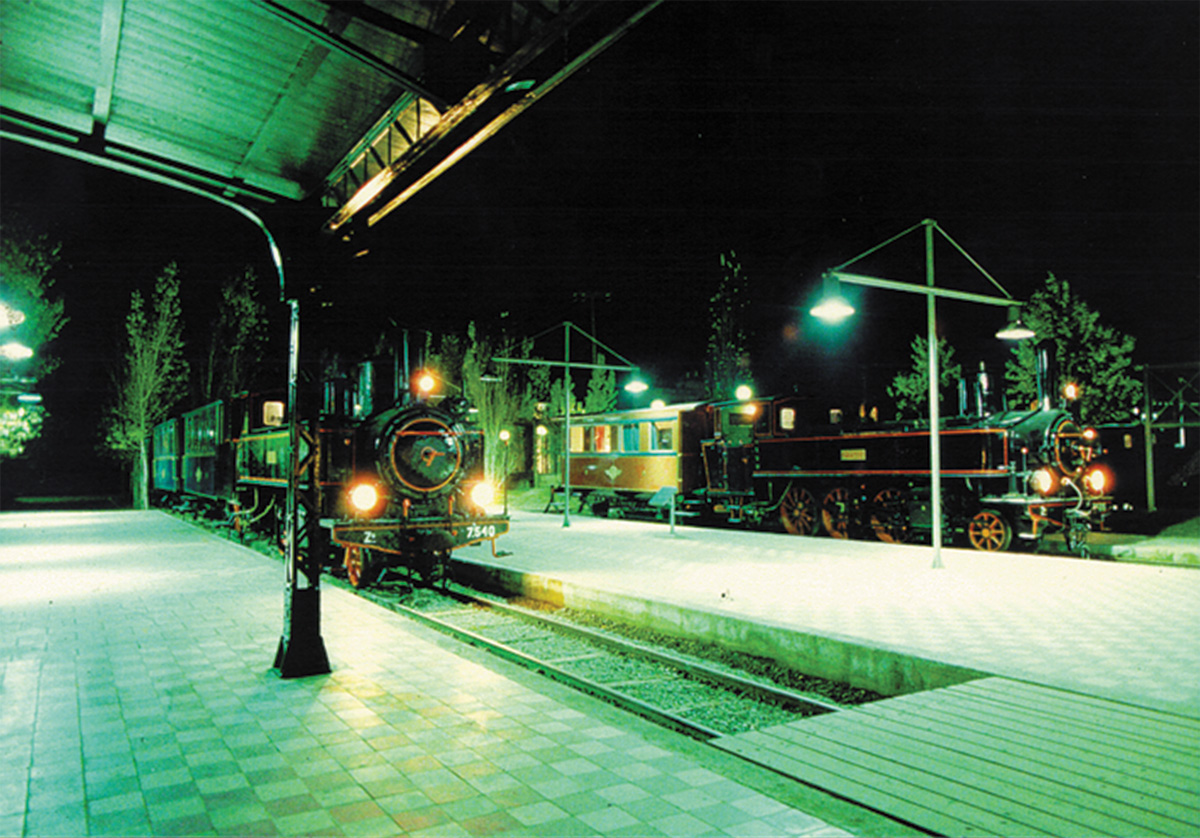
In 1986, Mayor Stavros Benos decided to transform the site into an open-air railway museum — the first of its kind in Greece. The inauguration took place that September, just days before the devastating earthquake that reshaped the city. The park had barely opened; every afternoon it was full of people. That evening's crowds, locals later noted, may have inadvertently kept many away from more dangerous spots when the earthquake struck. The park's full completion came in 1990.
[Source: Lois Papadopoulos, www.loispapadopoulos.net ]
The 24.6 acres including the two-storey station building and a water tower were granted by Hellenic Railways (OSE). The Municipality of Kalamata contributed a further 28 acres, bringing the total to 54 acres as they stand today.
The park's architectural transformation became a story in its own right. The project led by architect Lois Papadopoulos, with collaborators Giorgos Papakostas and Giannis Vlachos, received an award from the Action Culturelle Directorate of the European Union — recognition that placed Kalamata's railway park among Europe's leading examples of industrial heritage reuse in an urban setting.
Architecture and Recognition
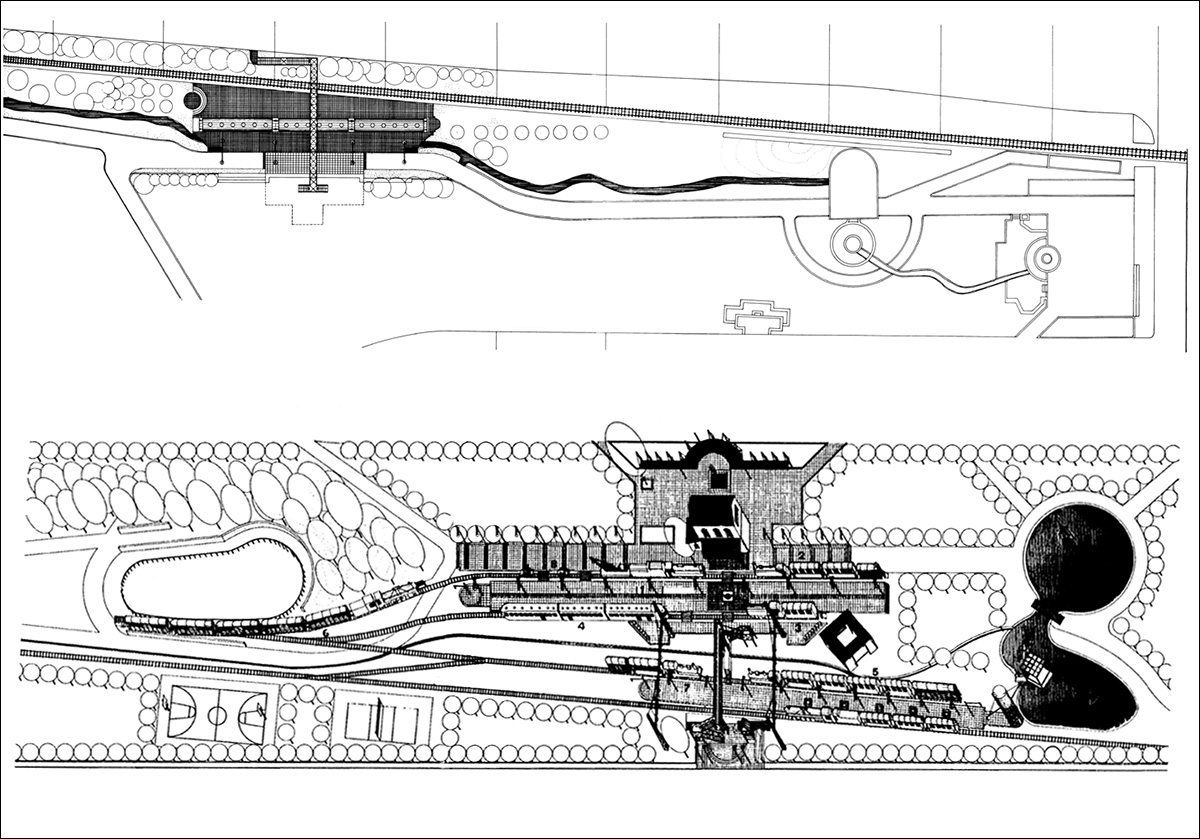
[Source: Lois Papadopoulos, www.loispapadopoulos.net ]
The proposal divided the space into three distinct zones: the "station", with exhibition and social functions; the "amphitheatre", for cultural events; and the "metro", as an open children's space. The aim was not simply to preserve exhibits, but to create a living space where history and everyday life coexist.
The rolling stock comes from OSE's Peloponnese and Thessaly networks, loaned to the Municipality on a long-term basis. The centrepiece is a group of four trains headed by Zs-series steam locomotives (531–555), pulling passenger and freight wagons from the Thessaly Railways. Alongside them: a 1952 DeDietrich railcar, one of the most iconic types operated by the SPAP network.
[Source: Lois Papadopoulos, www.loispapadopoulos.net ]
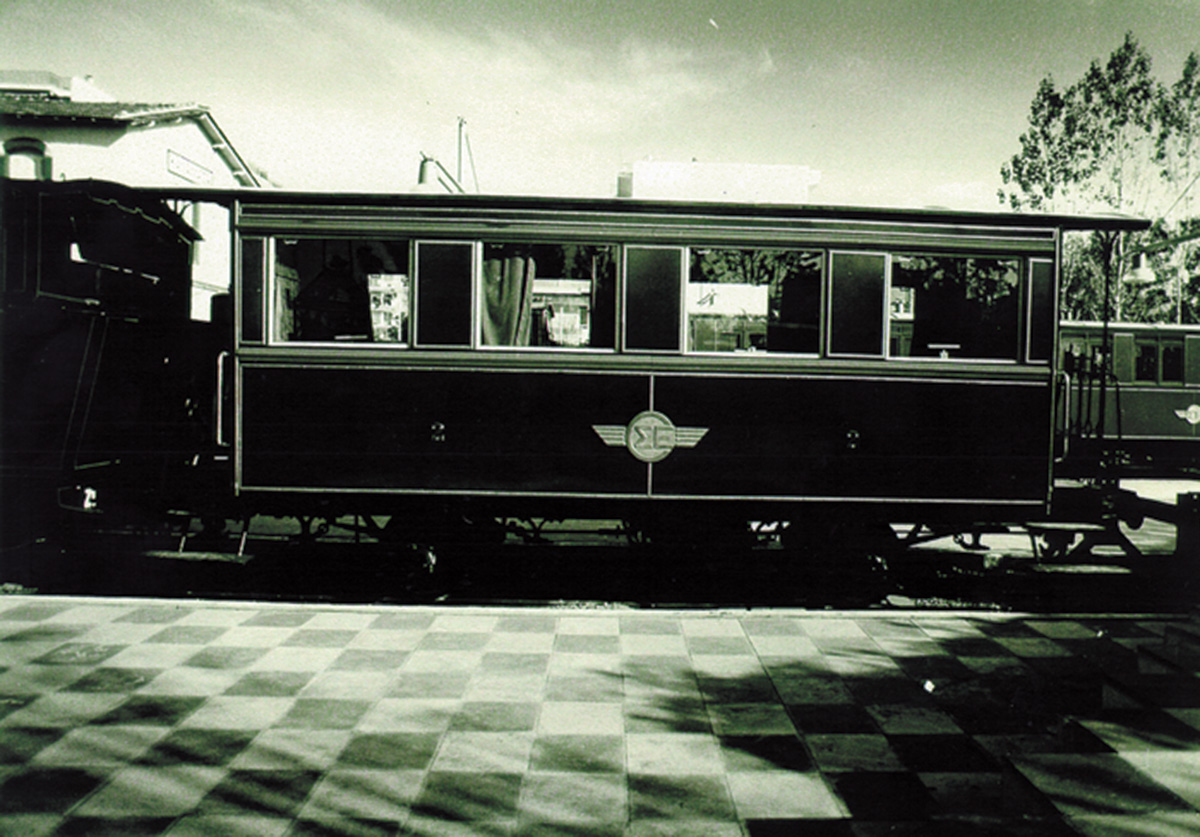
A special place belongs to the rare wooden HSAP trainset of the Baume Marpent type, dating to 1914. Very few of these survive in Greece; one remains in full working order with the Athens metro's heritage fleet, occasionally making nostalgic runs between Piraeus and Kifissia.
The restored station building now operates as a café, becoming the natural summer gathering point for locals and visitors alike. Around it: basketball and volleyball courts, playgrounds, a small ornamental lake, and the old water tower anchoring the site's industrial character. Several local associations are based in wagons and park buildings, keeping the space animated in ways that go well beyond the purely museological.
Five minutes from the central square, heading down Aristomenous towards the port — the history of Greek railways has found an unusual home. Open, green, and very much alive.

 33°C
33°C