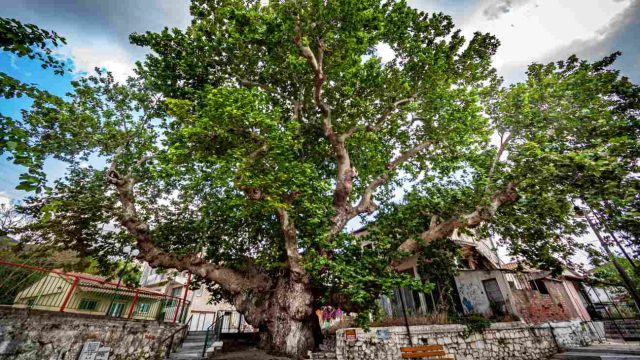
Plane Tree at Agios Floros
- Τρίπολης - Καλαμάτας, Agios Konstantinos, Agios Floros, Municipality of Kalamata, Messenia Regional Unit, Peloponnese Region, Peloponnese, Western Greece and the Ionian, 241 00, Greece



In a quiet demonstration field on the outskirts of Kalamata stands an olive tree that has been alive for an estimated 1,700 years. "Mana Elia" — the Mother Olive Tree — is officially designated as a Preserved Monument of Nature (Gov. Gazette 121/D/1980) and is recognized as the mother tree of the celebrated Kalamon variety: the large, dark, almond-shaped olive that the world knows simply as the "Kalamata olive."
The tree is impressive in scale — 14 meters tall, with a trunk circumference of 9 meters and a canopy spreading over 15 meters. It belongs to the variety Olea europaea var. Ceraticarpa, also known by regional names such as Nychati, Aetonicholia, Korakolia, Tsigkelolia, and Aetonichi. This variety is cultivated mainly in the Peloponnese, Western and Central Greece, and is considered one of the most important table olive varieties in Greece and worldwide.
What makes Mana Elia truly extraordinary is not its size but its story. According to local tradition, during the Greek War of Independence (1825–1828), Ibrahim Pasha's forces set fire to the fertile valley around Kalamata, destroying nearly all olive groves in the region. This tree alone survived the devastation. In the years that followed, locals took cuttings from its branches to replant the olive groves of Messinia and the surrounding area — making it, quite literally, the mother of the Kalamata olive as we know it today.
The tree is part of the Network of Bicentennial Trees of the Greek Revolution, a national initiative recognizing ancient trees connected to the country's struggle for independence.
Mother Olive Tree in the morias21 portal
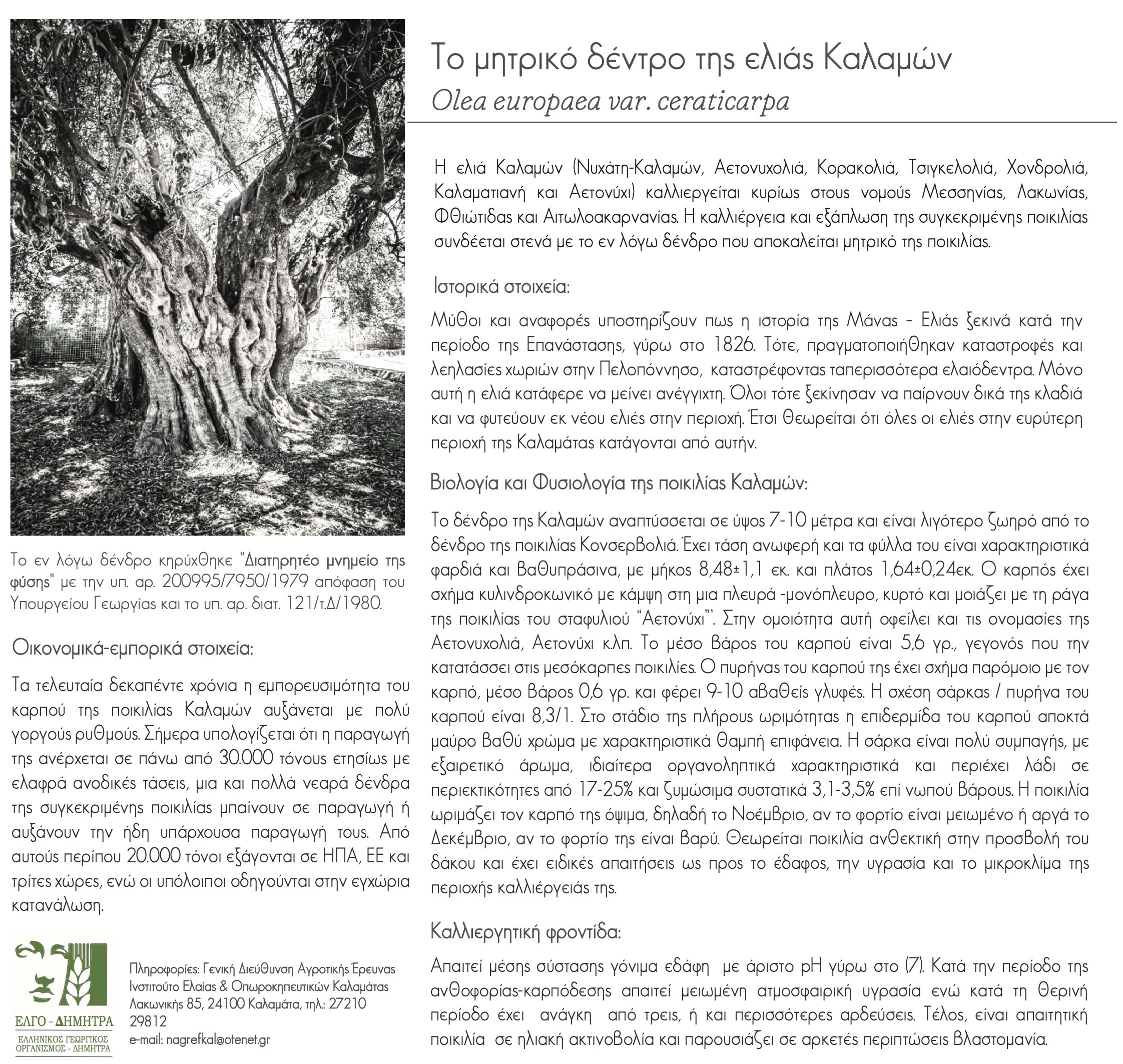
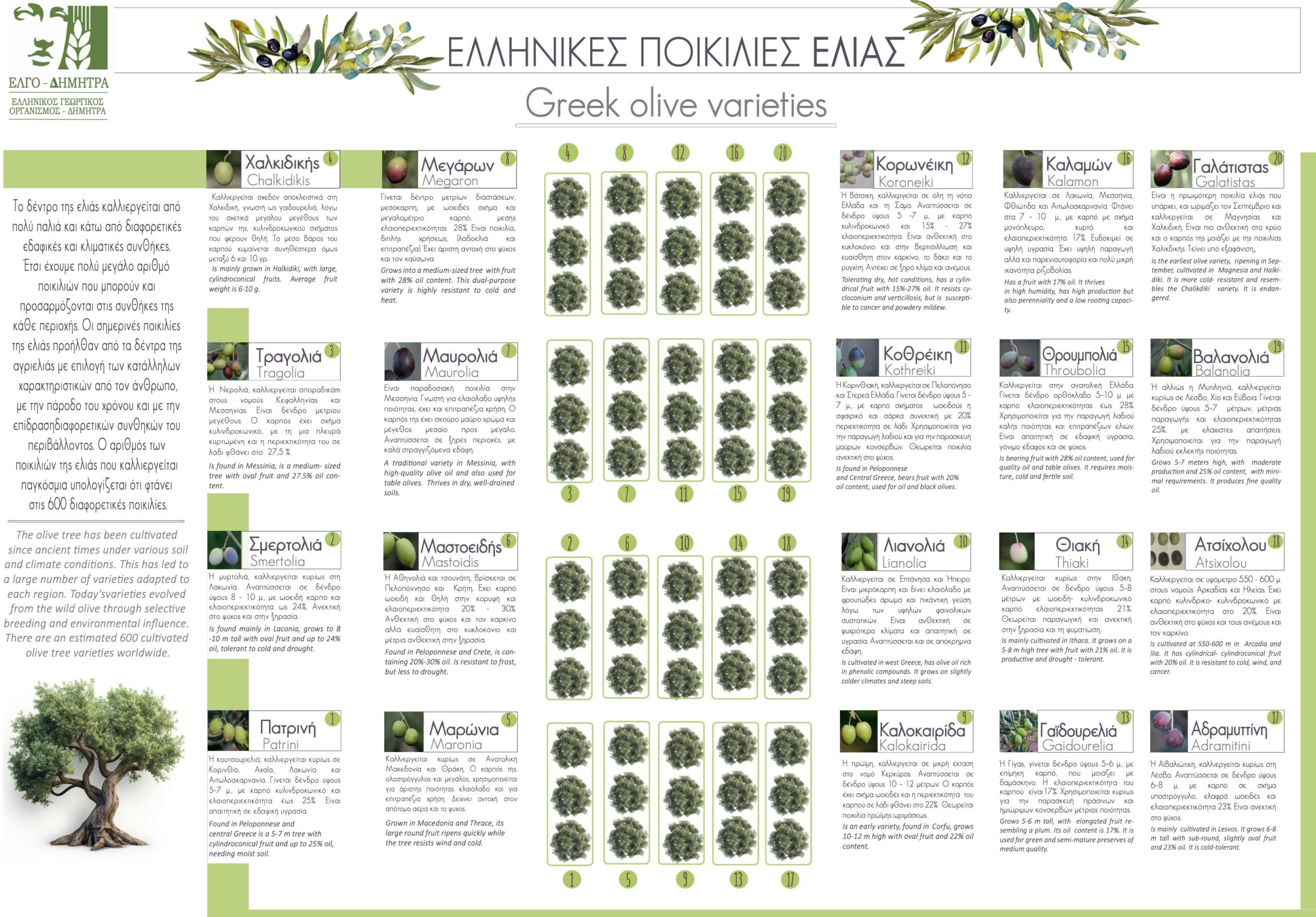
Mana Elia stands within the Demonstration Field of ELGO-DIMITRA (the Hellenic Agricultural Organisation) at Lakonikis 87. Alongside the ancient tree, the site hosts a curated demonstration olive grove maintained by the Institute of Olive, Subtropical Plants & Viticulture (IOSV), whose collection has received official recognition as an International Collection of Olive Varieties from the International Olive Council (IOC).
The grove brings together 20 of the most important and rare Greek olive varieties in a single, walkable space. Visitors can see side by side varieties from across Greece, each labeled and described in Greek and English. Among them are the Koroneiki — Greece's flagship oil variety, with up to 27% oil content; the Mastoidis (also known as Athinolia), an ancient dual-purpose variety from the Peloponnese and Crete; the rare Smertolia from Laconia, which grows even in rocky Krokean soils; the Mavrolia, a traditional Messenian variety prized for both oil and table olives; the Chalkidikis, the country's leading large-fruit table olive; and the Tragolia, a local Kefalonian-Messenian variety with small, intensely flavored fruit. The collection also includes lesser-known regional treasures like the Patrini from Achaia, the Lianolia from Western Greece (rich in phenolic compounds), the Thiaki from Ithaca, and the Atsiholou from the highlands of Arcadia — a rare variety valued for its high oleocanthal content.
Together, they offer a compact open-air overview of Greece's extraordinary olive biodiversity — something rarely seen outside specialized research facilities.
Surrounding the grove, a series of agroecological installations demonstrate the role of biodiversity in sustainable olive farming. These include bird nests placed on trunks and poles to host pest-controlling species such as owls and bats; patches of beneficial flora — native herbs and wildflowers that support pollinator populations; stone structures (xerolithia) built from dry-stacked local stone, providing shelter for reptiles and beneficial insects; water bodies designed to collect rainwater and support small mammals, amphibians, and birds; and a pollinator hotel — a constructed habitat made from reeds, wood, and pine cones, offering nesting space for solitary bees and other beneficial insects.
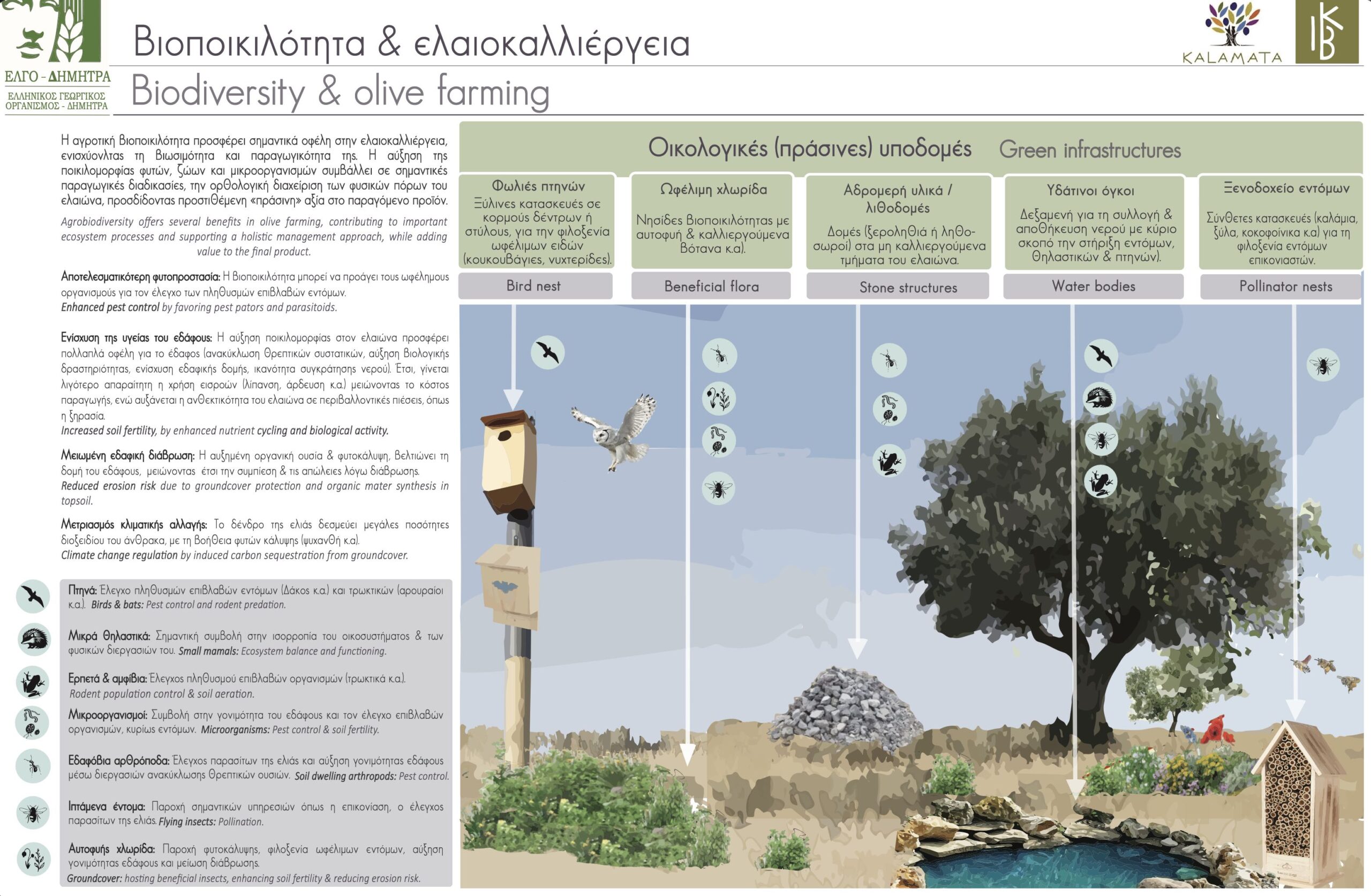
Interpretive panels explain how each element contributes to the olive grove ecosystem: enhanced pest control, improved soil fertility through nutrient cycling, reduced erosion from ground cover, and climate change mitigation through carbon sequestration. The installations reflect a growing international movement toward regenerative agriculture, and they make the scientific case accessible and tangible for visitors of all backgrounds.
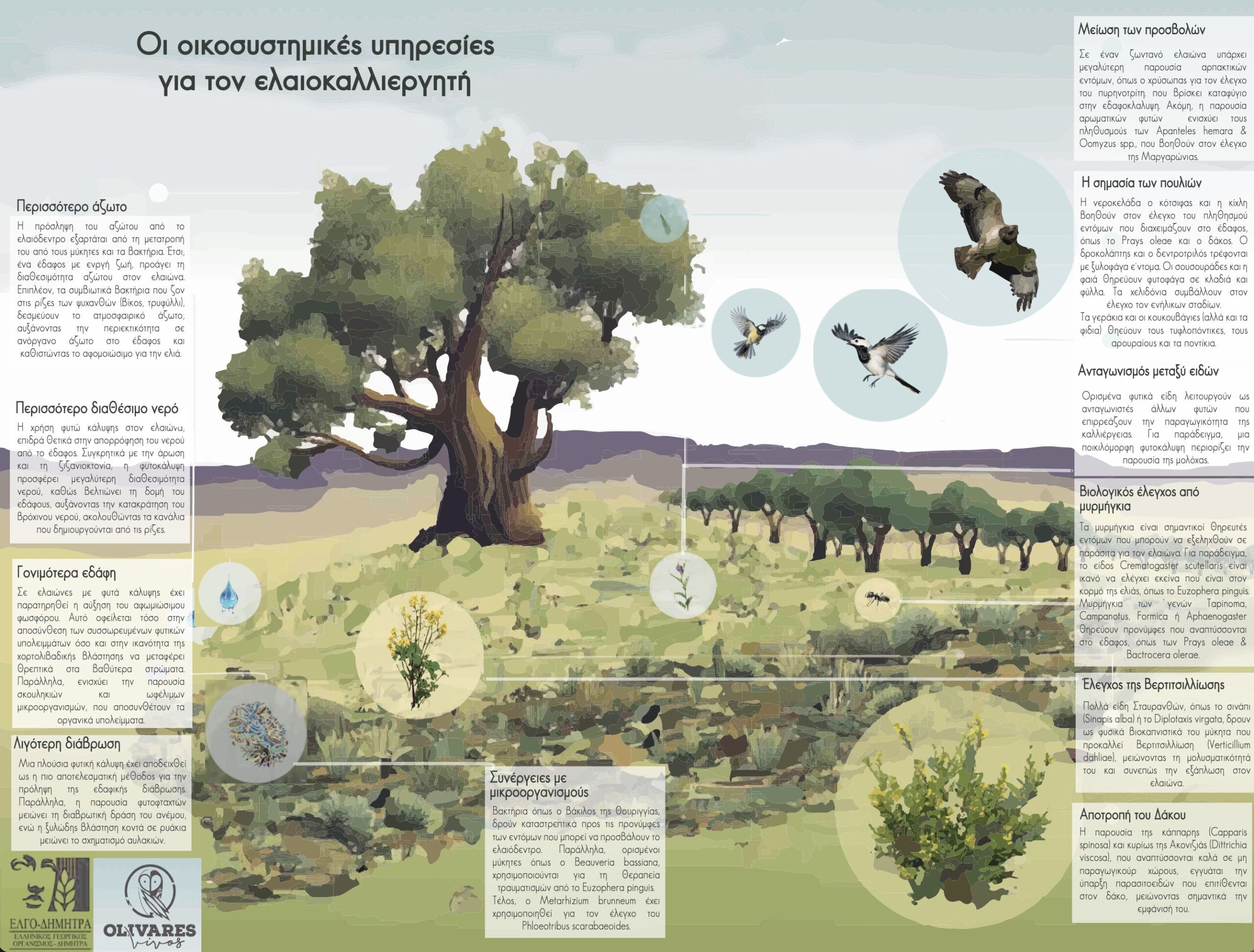
Mana Elia is not a museum or a curated attraction — it is a living, breathing piece of Kalamata's identity. The tree connects the city's ancient agricultural heritage to its most globally recognized product, and the surrounding demonstration field turns a visit into a genuine learning experience. For anyone interested in food culture, sustainability, or simply the story behind one of the world's most famous olives, this is an essential stop.



 33°C
33°C